Why the Bot-Majority Internet Demands a Marketing Reset
This post was created in partnership with Human Security
In the past year, the internet stopped being a human-majority place. Automated traffic grew eight times faster than human traffic in 2024, according to cybersecurity firm Human Security. Notably, Cloudflare reports that bots now account for more than half of all internet requests.
At Cannes Lions, four of the industry’s leading platforms gathered to work through what that actually means for marketers.
“We’re at a unique inflection point in history where more than 50% of the traffic on the internet is machine-based,” said Stu Solomon, CEO of Human. “The controls, the optimization, the marketing—everything is predicated on this notion that there’s a human on the other side of the screen, and that’s just not the case anymore.”
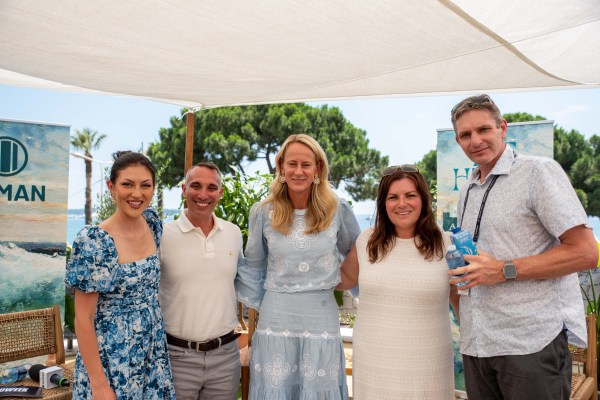
The session, moderated by ADWEEK’s senior tech reporter Kendra Barnett, brought together leaders from Human, Reddit, Roku, and Tripadvisor to examine what a bot-majority internet means for advertisers, publishers, and platforms and whether the industry is moving fast enough to respond.
From fraud to agents
Up until recently, the ad industry’s relationship with bots was simple: bots were bad, humans were good. That binary is no longer useful, according to Solomon.
“Turns out humans can be bad and machines can be good,” he said. “Now we get into this world of agentics, where an autonomous agent is working on behalf of a human that’s been authorized to do something on my behalf. Is it good or bad? It kind of depends on what it’s trying to do.”
To illustrate the gap between agentic’s capabilities and judgement, Solomon described an internal test where his team programmed an agent to purchase three birthday cakes from a bakery website. The agent navigated the site, used dropdown menus, selected the cakes, and completed the transaction—then returned a $750 bill. “It got the job done, but it didn’t have the human understanding of what good looks like,” Solomon said. “I was regretting every bite.”
Trust as infrastructure
For platforms whose value proposition rests on authentic community, the stakes are particularly high. For example, Reddit has built multiple layers of defense designed to verify that the people engaging on its platform are who they claim to be.
“Users come to Reddit every day because they want to be part of the community,” said Roelof van Zwol, evp of ads monetization, data science and machine learning at Reddit. “They choose to not truly reveal their entire identity, but it gives them a level of anonymity that allows us to have real conversations about real problems. That integrity and real authentic conversation is crucial.”
Van Zwol outlined Reddit’s emerging approach to agentic traffic. Rather than blocking agentic traffic outright, the platform is focused on identification and containment, aimed at ensuring agents make themselves known and operate within defined limits. “We do want to make sure that when there are agents, we limit what they can do, or at least that they make themselves known,” he said.
The question of trust also surfaced around content quality and LLM scraping. Tripadvisor, which holds more than a billion human-generated reviews, has found itself in an unexpectedly strong position as AI systems increasingly favor sourced, specific, and recent content, said Allison Lambroza, senior director and head of media and brand partnerships at Tripadvisor.
“We are the number one most cited travel source in over 70% of queries,” Lambroza said. “We still see over 40% of people citing misinformation as a barrier to entry when it comes to travel. People still want to do their research.” For Tripadvisor, she said, the flywheel is the same one that built the company: trusted reviews from real people feed LLMs that reward specificity.
CTV’s different equation
Connected television is not immune from bots, but structurally harder to game, according to Lauren Benedict, vp of global ad sales and partnerships at Roku.
“The CTV space, it’s just a little bit more expensive for bots to live in because tracking video is challenging,” Benedict said. Roku’s 100 million authenticated, logged-in households give it a foundation that open web publishers lack, but Benedict was clear that the platform isn’t complacent. Roku has partnered with Human and built watermarking capabilities designed to validate that a real viewer is on the other side of the content.
Interoperability is central to how Roku is building for what comes next, Benedict said—constructing data and tech infrastructure that can support agent-to-agent buying as it matures, while preserving the human accountability layer that advertisers still require. “The human touch is still important to us,” she said. “But the fair amount of build that we’re doing to integrate is really meaningful.”
Who’s accountable when agents transact?
Citing recent data from the Interactive Advertising Bureau, ADWEEK’s Barnett noted that up to two-thirds of U.S. media buyers are already exploring investment in autonomous campaign execution. This raises the question of: when something goes wrong in a fully automated transaction, who owns it?
Human’s Solomon called out Google’s framework as a good example of how to approach the issue: agents must be authentic, authorized, and accountable. “The accountability starts with the person, the human being, who set it on its journey in the first place,” he said. “Whether it’s within the advertising mindset or the broader economy of the internet, that accountability is going to further sit with the human being who set the plumbing in motion.”
Reddit’s Van Zwol agreed that the feedback loop itself will become a form of accountability. “Rather than running a campaign and waiting three weeks to get results, that feedback loop becomes much quicker,” he said. KPIs, Tripadvisor’s Lambroza added, will shift accordingly—away from page views and toward intent and qualification.
The hot take round
Barnett closed with a lightning round, asking each panelist to share one AI hot take.
Human’s Solomon pushed back on the industry’s defensive posture. “Everybody’s looking at it like a threat because they’re thinking about this as just disrupting their apple cart,” he said. “It’s just an extension and enabler of the inevitable scenario that’s happening.”
Roku’s Benedict argued that brands need to start thinking in terms of two distinct audiences—human and agentic—and build strategies that serve both. “How they sort of use the center of gravity to make sure that they can build both and have them be collaborative versus bifurcated is really where I think a lot of brands are leaning in,” she said.
Reddit’s Van Zwol referenced a marketing and sociology book he’d studied 20 years ago called The Wisdom of Crowds. “I think that’s where we need to start,” he said. “Let’s pull all of us together because we are the wisdom of the crowd, and then probably we’ll have a good idea of what the future might look like.”
And Tripadvisor’s Lambroza brought it back to fundamentals. “Content is still king, queen, whatever you want to call it,” she said. “It’s so new, but foundationally the basics is good content that is trusted, that people lean into.”
https://www.adweek.com/media/why-the-bot-majority-internet-demands-a-marketing-reset/