Zuckerberg Rejects FTC’s Arguments on Day 1 of Meta Antitrust Trial
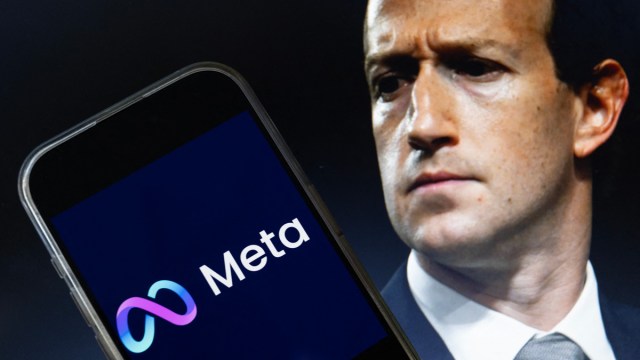
Meta CEO Mark Zuckerberg took the witness stand on Monday, the first day of a landmark competition trial brought against the tech company by the Federal Trade Commission.
The 40 year-old tech exec was questioned in a Washington, D.C. courtroom, where he rejected the FTC’s allegations that Meta sought to unlawfully stamp out market competition through the respective 2012 and 2014 acquisitions of Instagram and WhatsApp.
The FTC alleges that Meta now operates an illegal monopoly over apps for sharing content with friends and family, a position it secured in part due to the acquisitions.
The FTC has pointed to internal communications from the company, dating back to 2008, in which Zuckerberg suggested it would be easier to buy out competitors rather than go head-to-head with them.
At the time of the deals, Instagram, acquired for $1 billion, had about 30 million users, while WhatsApp, bought for $19 billion, had around 450 million; those numbers have since ballooned and both platforms have grown faster than Facebook, Meta’s flagship platform, according to The New York Times.
Should the FTC be successful in court, Meta could be forced to divest Instagram and WhatsApp, threatening the company’s dominance in social media. Spinning off one or both services could result in the loss of billions of dollars in ad spend, as ADWEEK previously reported.
A critical element of the FTC’s case is its narrowly defined market. In U.S. antitrust enforcement, a relevant market is determined in order to identify the set of products or services and geographic region in which a given company competes. This helps establish whether the company in question holds monopoly power.
In the FTC’s case against Meta, only Snapchat and a small social network called MeWe are included in the relevant market, parameters that may portray Meta as having outsized control of the market by blotting out other social platforms including TikTok, X, and YouTube.
Zuckerberg took direct aim at the market definition determined by the FTC in his testimony. He downplayed the role of friend-to-friend sharing on Meta platforms, stating that content from friends now makes up just 20% of what users see on Facebook and about 10% of what they see on Instagram. The sites, he said, now serve primarily as a “broad discovery and entertainment space.”
To evidence the shifting shape of the social media landscape, Zuckerberg pointed to a 2018 decision by the company to highlight content from users’ real friends and family rather than other user-generated content, noting that this effort flopped amid users’ growing demands for content from sources outside of their real-world networks.
Meta’s legal team has argued that the relevant market in the case should be far more broad, as Meta platforms compete against other social giants like TikTok, YouTube, and X.
Meta’s defense is being led by Mark Hansen, a partner at Kellogg, Hansen, Todd, Figel & Frederick. Hansen, in his opening remarks on Monday, said the FTC’s arguments are “at war with the facts and at war with the law.”
Even if it prevails, the FTC must prove that splitting up Meta would meaningfully boost competition.
The case will be decided by U.S. District Judge James Boasberg. The culmination of a crackdown on Big Tech undertaken during Donald Trump’s first presidential administration, the trial is expected to stretch on for up to two months.
https://www.adweek.com/media/zuckerberg-rejects-ftc-arguments-meta-antitrust-trial/