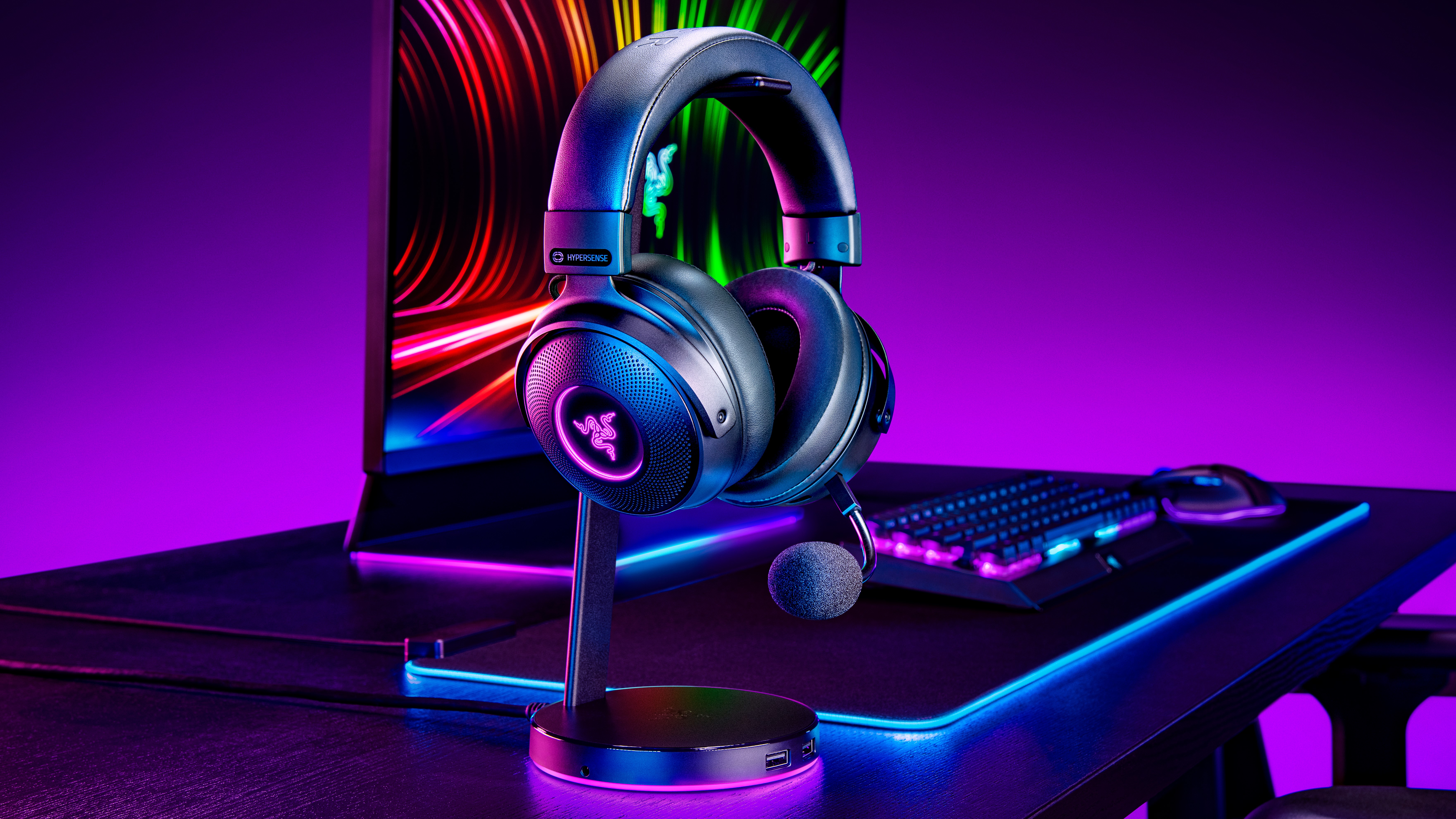
There are many different ways to evoke a feeling of immersion with your video game setup. Your choice in monitor shape and size can make virtual worlds seem more real, and responsive peripherals that eliminate lag make your movements more fluid. Audio also has a dramatic effect. Gaming hardware company Razer claims it has upped the ante by applying haptic feedback to gaming headsets, just like you would find in a controller. But do vibrations on your head make your experience more fun?
Razer announced three new headsets today: the Razer Kraken V3, the Razer Kraken V3 HyperSense, and the wireless Razer Kraken V3 Pro. As you might guess by the “V3” nomenclature, these are updates to the Razer Kraken line, which currently also includes the vibration-free Razer Kraken V3 X, among other sets.
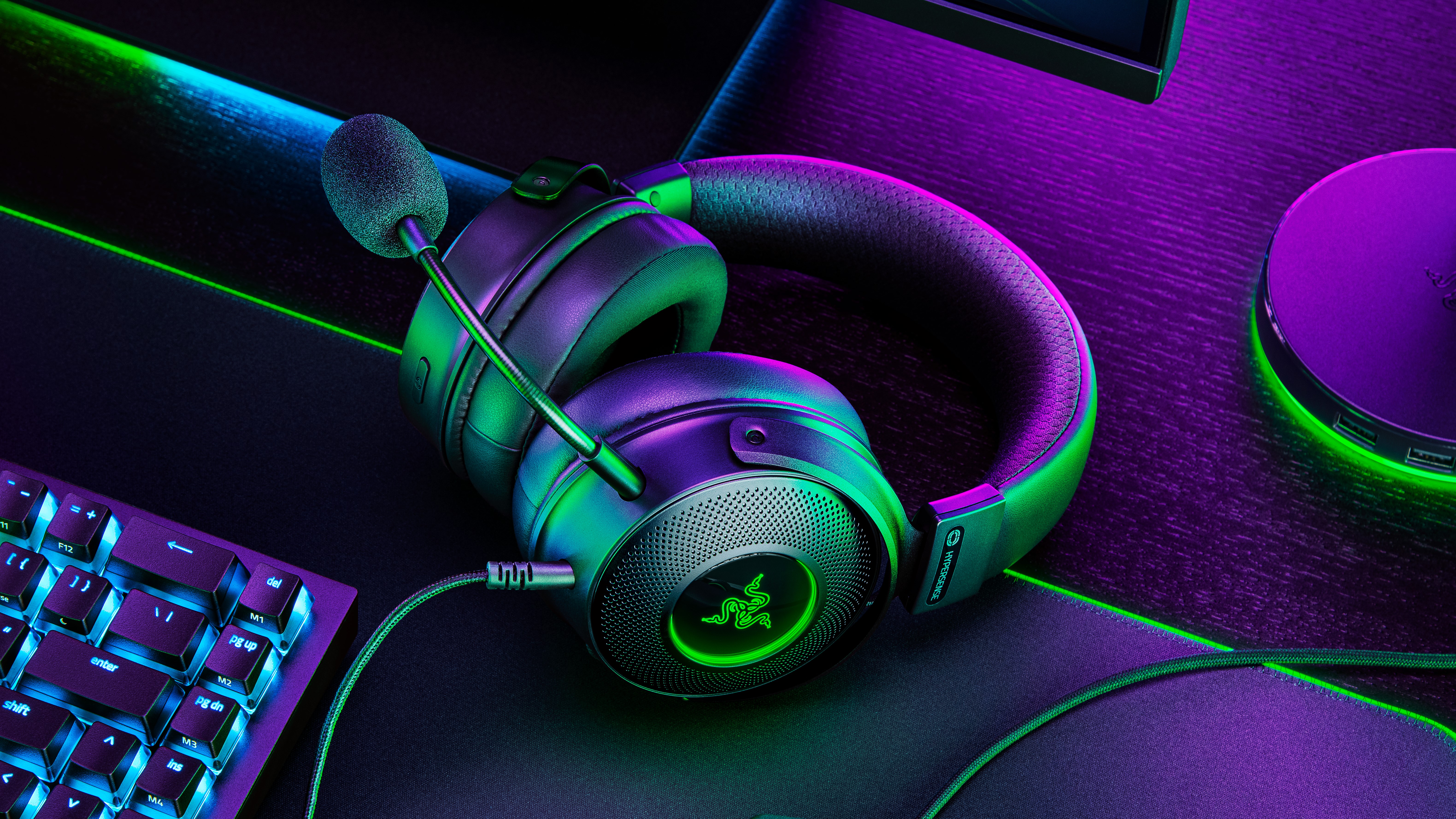
The Kraken V3 HyperSense and Kraken V3 Pro both use haptic feedback. Razer calls the feature HyperSense, and it employs haptic drivers in each earcup. The drivers take “the shape and frequencies of game audio,” as Razer puts it, processes them in under 5 ms, and turns them into vibrations. Digital signal processing covers a frequency range of 20–200 Hz.
Each haptic driver is connected to either the left or right audio channel, depending on which earcup it calls home. The vibrations are supposed to move with game audio from left to right and at varying levels. So if there’s a truck exploding to your left, your left earcup would vibrate—at a force of up to 4.3 g. We’ve already seen this technology in Razer’s Nari Ultimate headset, which is being discontinued to make room for the fancy new Krakens.
Concerned that the feedback will be too much for you? On-ear controls let you set the intensity to high, medium, low, or off. This is a nice consideration that the Nari Ultimate doesn’t offer.
What about actual sound quality?
We won’t know how the headset sounds until we test it, but we do know that Razer is employing its TriForce Titanium 50mm drivers in the set. The technology divides the audio driver into three parts: one for low frequencies, one for highs, and one for mids. The drivers are also coated in titanium to enable higher frequencies without creating distortion. The Kraken V3 doesn’t seem to take advantage of the latter, though. Its frequency response spec tops out at 20,000 Hz, which is very typical for a gaming headset. You can also add surround sound to the headset via THX Spatial Audio, an app owned by Razer.
I’ve tried the TriForce drivers in the Razer BlackShark V2. In that headset, they delivered layered and detailed audio across games and music. But the new Krakens are tuned to a smaller frequency response (20–20,000 Hz versus 12–28,000 Hz on the BlackShark V2), and the headsets are constructed differently.
The Kraken V3 HyperSense will be available for $130, and the wireless Kraken V3 Pro will go for $200. If you’re not sold on the idea of a vibrating cranium, there’s also the similarly built Kraken V3. It skips the haptic feedback and costs $100.
Note: Ars Technica may earn compensation for sales from links on this post through affiliate programs.
https://arstechnica.com/?p=1806355