

What makes it all work?
Some customers in Germany and California will be part of an early access program for Drive Assist Pro from next month, with a wider rollout in the first half of 2027 for model year 2026 CLAs, as well as the model year 2027 CLA, GLC Electric, GLE, GLS, and S-Class, and more coming in model year 2028. (The system is already live in China.)
The unifying factor is the MB.OS, the automaker’s latest operating system. Like other automakers, Mercedes has embraced the software-defined vehicle paradigm, replacing dozens or even hundreds of discrete ECUs with a handful of powerful domain controller computers that oversee vehicle dynamics, occupant comfort, infotainment, and automation.
Drive Assist Pro combines 10 cameras, five radars, and 12 ultrasonic sensors, all stitched together by a domain controller that uses Nvidia’s Orin processors. I’m told that in China, cars are now advertised with processor and RAM specs rather than boring information like range or performance: In that spirit, Mercedes says it can deliver 254 tera operations per second, uses a 2.5 Gbit Ethernet network, and has more than 70GB of RAM.
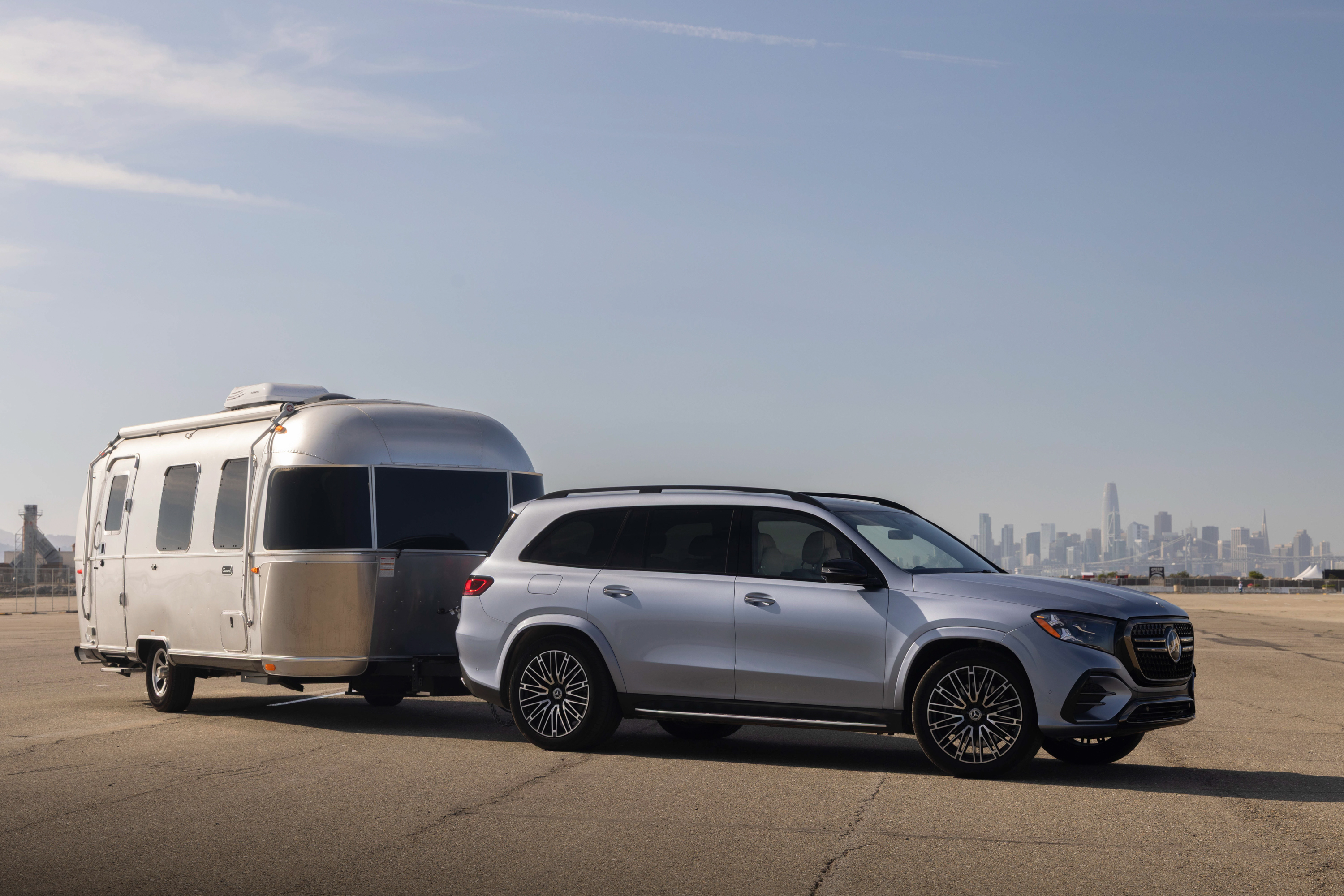
There’s also an optional trailer assist I tested.
There’s also an optional trailer assist I tested.
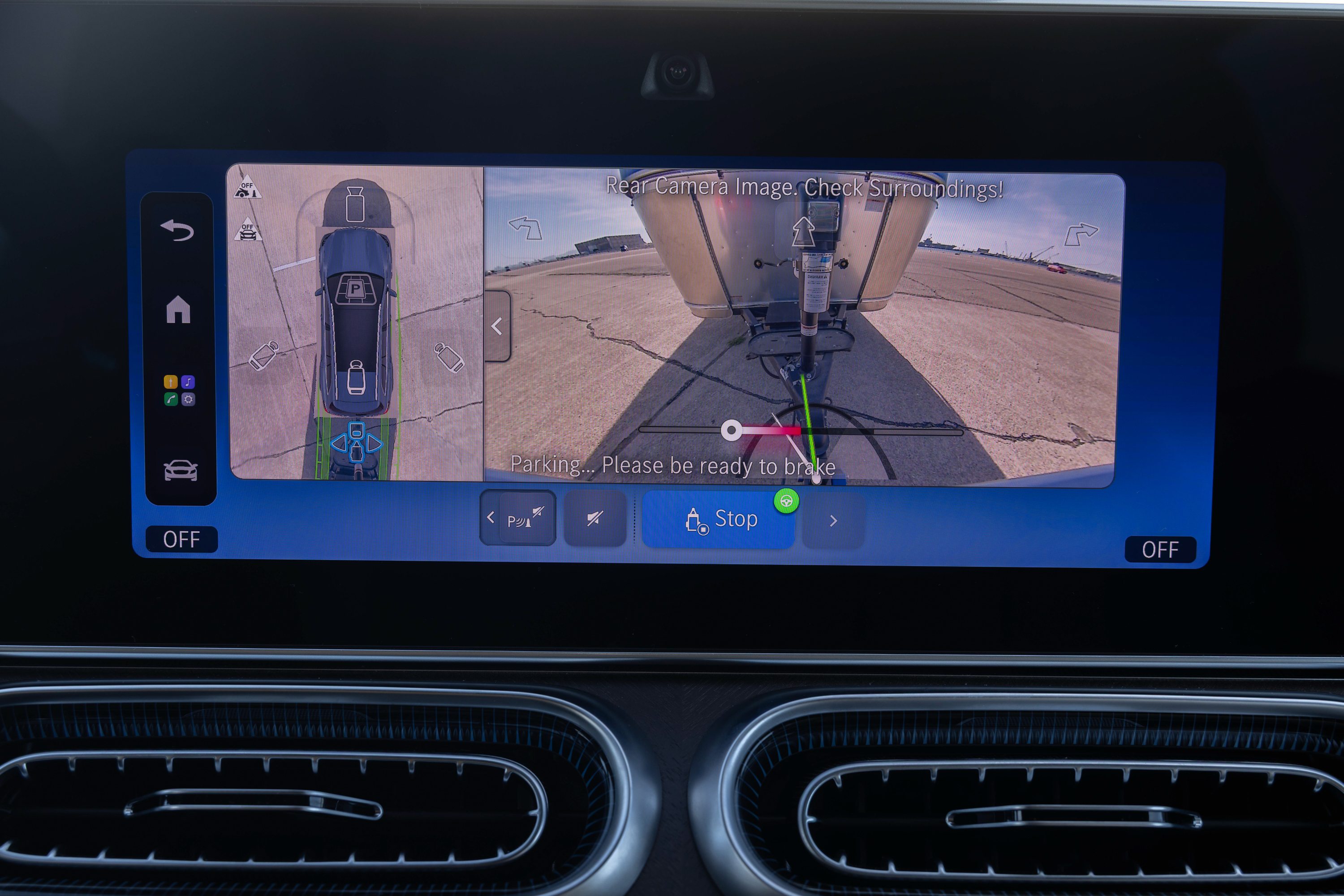
The system uses the angle of the tow hitch to determine how much to steer the car. You can use the slider on the screen, too.
The system uses the angle of the tow hitch to determine how much to steer the car. You can use the slider on the screen, too.
There’s also an optional trailer assist I tested.
The system uses the angle of the tow hitch to determine how much to steer the car. You can use the slider on the screen, too.
The driving decisions are made by Nvidia’s Alpamayo end-to-end tokenized stack that picks your driving trajectory, with a rules-based system running alongside as a safety check. That’s reassuring, as is the knowledge that Nvidia’s stack has been certified by Germany’s TÜV, which takes a less lackadaisical approach to safety than the current incarnation of the US Department of Transportation.
https://arstechnica.com/cars/2026/11/mercedes-clever-new-driving-assist-handles-complex-traffic-like-a-champ/
