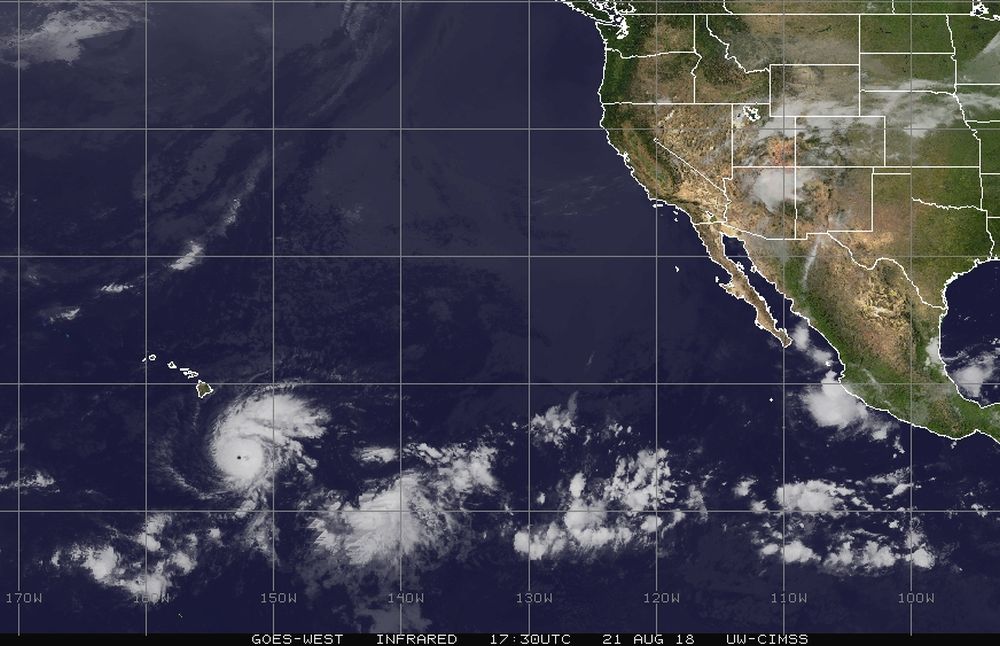
Enlarge / Hurricane Lane threatens the Hawaiian Islands. (credit: University of Wisconsin)
For Hawaii, the “big one” came in 1992 when Hurricane Iniki struck the island of Kauai as a Category-4 storm, causing $3.2 billion in damage and killing six people. This remains the costliest and deadliest storm to hit the islands in recorded history, and only two other hurricanes—an unnamed storm in 1871 and Dot in 1959—have hit a Hawaiian island in that time frame. (Several readers have mentioned Hurricane Iwa, but this storm’s center passed just north of the islands).
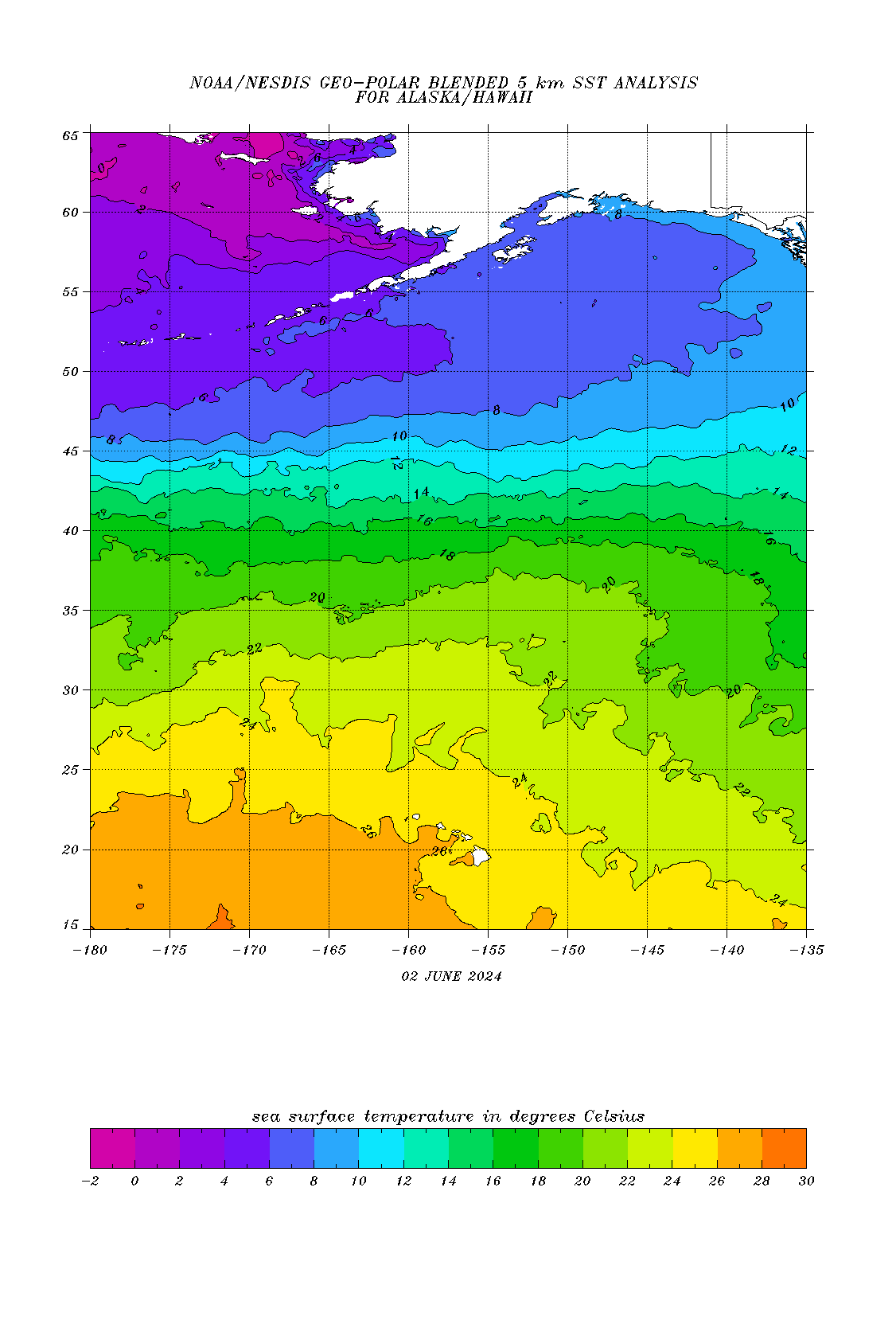
At only about 20 degrees north of the equator, Hawaii is well within the tropics, and therefore we might expect hurricanes to strike there more often. However, deep trenches in the Pacific Ocean near the islands facilitate the upwelling of significantly cooler water. Typically, sea surface temperatures near Hawaii are just below the 26.5° Celsius threshold that is favorable for hurricane formation and intensification. However, this year, sea surface temperatures are about 0.5 to 1.0 degrees above normal near the islands.
Unfortunately, this has increased the vulnerability of the Hawaiian Islands to hurricanes this year. Earlier this month, the Category-4 Hurricane Hector appeared to threaten the islands for a few days, but ultimately its track remained a few hundred kilometers to the south. Now, another major hurricane, Lane, seems considerably more likely to bring significant effects to the islands.
Read 8 remaining paragraphs | Comments


https://arstechnica.com/?p=1362133