

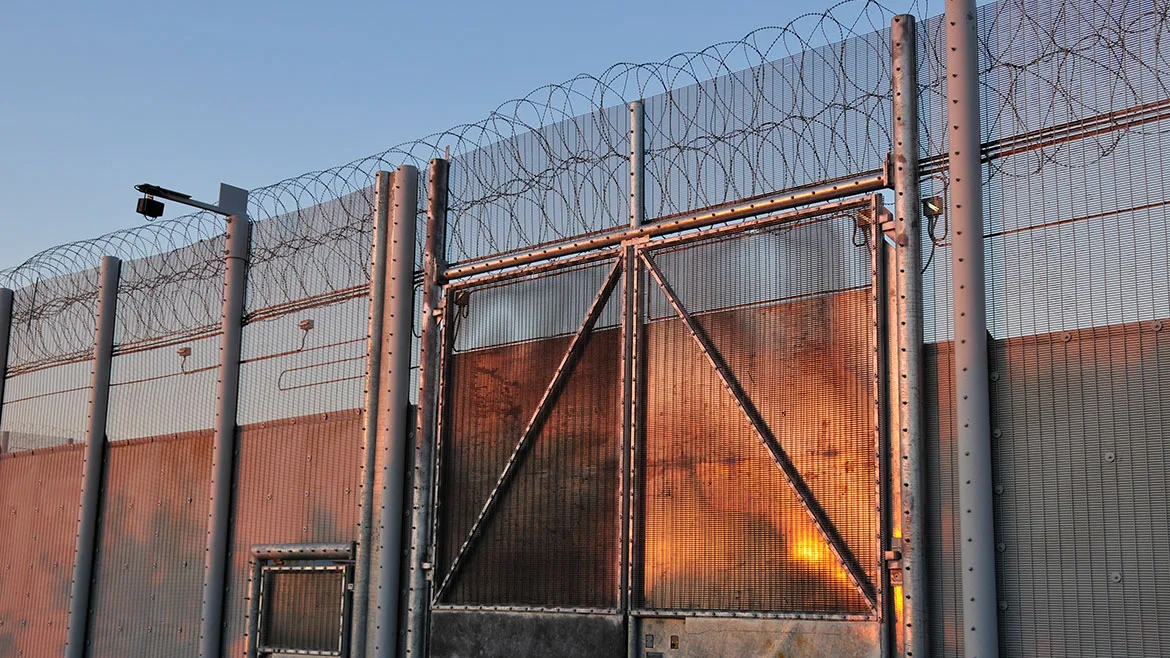
The image most security professionals still carry of perimeter crime is the opportunist: the actor who spots an open gate, grabs what is within reach, and flees. While that type of criminal certainly still exists, the sophisticated adversary keeping us practitioners awake at night looks nothing like them.
The adversary that matters today plans. They surveil, rehearse, and study a facility the way an engineer studies a blueprint. By the time this opponent executes a physical breach, they have already answered every operational question that would have stopped an amateur.
The Hardening Trap
We have historically responded to this tactical shift by layered hardening: installing more sophisticated security assets, taller barriers, sharper cameras, and demanding faster alerts at the exact moment of contact. While these measures are undeniably useful, they all share one quiet, flawed assumption. They assume the security incident begins when the adversary touches the perimeter.
For a sophisticated adversary, that assumption is wrong by days, sometimes weeks. The breach is not the beginning of the crime. It is the final step of preparation.
That preparation happens at your perimeter, which is exactly the vulnerability we tend to miss. We naturally think of the boundary line as our instrument, the tool we deploy to keep intruders out. To a capable adversary, however, the perimeter is their instrument, and arguably the more valuable one.
The perimeter is where they learn how on-site leadership responds and how long it takes. It is where they map gaps in camera coverage, identify when the yard is busy, observe when the lights cycle, track how a guard moves, time how quickly you will respond, determine how many times they will respond to that “false alarm” until they either bypass or turn off security monitoring equipment. Every approach is a question; every quiet response is an answer. The perimeter is the adversary’s first and best source of intelligence, and they exploit it long before you have any reason to suspect them.
This is why we must treat the perimeter as a dynamic threat vector rather than a static barrier. Information flows across it in both directions, and right now, the sophisticated adversary is winning that exchange. They leave the fence line with a working operational model of your site. We are left with, at most, a cleared alarm.
Applying the Physical “Kill Chain”
To fix this imbalance, physical security leaders should borrow a proven concept from cybersecurity colleagues: the intrusion kill chain. Cyber defenders view an attack as a linear sequence of steps, beginning with initial reconnaissance and ending, much later, with data exfiltration or disruption. The entire cyber discipline has shifted toward detecting the earliest links in that chain, because neutralizing an adversary during the reconnaissance phase is cheaper, safer, and far more decisive than catching them mid-breach.
Physical security has a kill chain too. Unfortunately, we have trained our operations to watch only the final link. The reconnaissance, the probing, and the rehearsal all play out at our perimeter in plain view, yet we routinely let them pass.
The reality is that the signals of this reconnaissance are already arriving at our security operations centers. We are not blind to them; we are actively discarding them.
“Physical security has a kill chain too. Unfortunately, we have trained our operations to watch only the final link.”
Turning Noise into Intelligence
Consider what a mature physical security program currently treats as noise:
- The nuisance alarm cleared before verification.
- The vehicle that idled at the fence line for ten minutes and drove off.
- The trespasser who tripped a perimeter sensor but vanished before a guard arrived.
- The third consecutive night a particular sensor activated without an obvious cause.
Our operational instinct is to suppress these events, report them (if we are lucky), and forget them because, individually, each one appears to be a non-event. But to the adversary who generated them, not one of those actions was meaningless. Each was a controlled test of your system, and each produced exactly the data it was meant to collect.
Your false alarms are the adversary’s field notes.
We have been discarding our richest early-warning data stream simply because we filed it under “nuisance.”
The novel move for physical security leadership is not to buy a better wall or a faster alert system. It is to invert the fundamental purpose of the perimeter. We must stop treating it solely as the place where physical attacks are stopped and start treating it as the place where adversary preparation is observed.
Rewriting the Security Equation
In practical terms, this means making the detection of reconnaissance, not the breach itself, the primary objective of boundary sensors. It requires building data memory across scattered, seemingly unrelated events. When we connect those dots, the same vehicle appearing on three different nights or the same probe occurring at a known blind spot no longer reads as three isolated nuisances. Instead, it reveals itself as a single, coordinated pattern.
Ultimately, the most valuable output of a modern perimeter is no longer physical deterrence, nor is it a breach alarm. It is actionable intelligence about who is preparing to attack your facility, gathered while they are still planning, and while you still have the time to counter the adversary.
None of this implies abandoning physical barriers. Layered security at your perimeter remains one of the most effective approaches to stopping an attack when it finally arrives. But a wall or a simple chain-link fence will never stop planning, and planning is where sophisticated adversaries earn their edge. They already understand that your perimeter is a fountain of intelligence, and they have been reading it for years.
The only real question left for security leadership is whether we start reading it back, and whether we start before they finish.
https://www.securitymagazine.com/articles/102479-the-crime-began-well-before-the-breach
