


In the wake of increasing safety concerns, school administrators understandably face immense pressure to act quickly to fortify their classrooms. In a climate of fear, aftermarket barricade devices are often represented as a quick, cost-effective path to peace of mind. However, these “solutions” can introduce a new set of unintended consequences.
These devices may compromise fundamental life-safety codes, violate federal accessibility standards, and can even be weaponized by an intruder to trap victims and block first responders. Effective school security is a balance, not a trade-off. Fulfilling our “duty of care” requires protecting students from the threat of an armed intruder without increasing their vulnerability to more frequent hazards like fires, medical emergencies and violence. And in our rush to secure the door, we must ensure we don’t accidentally throw away the key to life safety.
The Double-Edged Sword: When Security Becomes a Trap
The primary technical concern regarding barricade devices is their potential to be deployed by assailants to prevent occupants from exiting or first responders from entering. While these devices are designed to keep threats out, they can be utilized to trap occupants.
The 2018 shooting at the Capital Gazette offices in Annapolis provides a documented instance of this occurrence. According to trial evidence and statements from the Anne Arundel County State’s Attorney, the perpetrator used a barricade device to secure the building’s rear exit. This action not only prevented employees from fleeing through the back door as the shooter entered from the front, but testimony indicated that at least one victim was shot while trying to free the blocked door.
“Effective school security does not require a choice between being ‘locked in’ or ‘locked out.’”
Lessons from Oxford High School: Systemic Failure Versus Hardware Fixes
The 2023 independent report by Guidepost Solutions regarding the 2021 Oxford High School shooting provides a different perspective. The report concluded that the fatal incident was preventable, not through the installation of additional locking devices, but through the consistent execution of existing threat assessment and suicide intervention policies.
The findings detailed systemic “missteps at each level” of the district’s hierarchy — from the Board of Education and the Superintendent to the school’s administration and staff. These failures included the use of an outdated suicide intervention protocol and a documented lack of awareness among faculty regarding the district’s threat assessment procedures. Additionally, the report noted that during the incident, more than 90 security cameras were unmonitored, which hindered the ability to broadcast real-time information regarding the shooter’s location.
The Oxford case illustrates the risk of prioritizing “security theater” — the implementation of highly visible retrofit hardware — over the operational and behavioral monitoring required to maintain a safe environment. Ultimately, the report underscores that effective school safety is rooted in policy execution and professional training, which no secondary locking device can replace.
Debunking the Myth of the “Breached Lock”
A primary driver for the adoption of aftermarket barricade devices is the perception that traditional locksets are insufficient to withstand a forced entry attempt. This concern is often reinforced by popular media tropes, such as an intruder “shooting the lock off.”
The 2015 Final Report of the Sandy Hook Advisory Commission states: “The testimony and other evidence presented to the Commission reveals that there has never been an event in which an active shooter breached a locked classroom door.” This finding has remained consistent in the years following the Sandy Hook tragedy.
The historical data suggests that the vulnerability in classroom security is typically not a failure of the locking hardware itself, but rather a failure to ensure the door was locked in the first place. Traditional, code-compliant locksets provide the necessary level of security to deter an assailant.
“To remain compliant, classroom security rests on three technical pillars: one-motion egress, mounting heights and accessibility, and authorized outside access.”
Life Safety is Non-Negotiable: The Technical Reality
The model codes that govern our schools — the International Building Code (IBC), the International Fire Code (IFC), and NFPA 101: Life Safety Code — are not arbitrary. These regulations were developed over decades in response to historical tragedies where occupants were unable to escape buildings during fires. In the security industry, it is often said that any attempt to bypass them for a “quick fix” risks repeating the lessons of the past.
To remain compliant, classroom security rests on three technical pillars: one-motion egress, mounting heights and accessibility, and authorized outside access. Aftermarket barricade devices frequently conflict with all three of these pillars. Many require multiple steps to deploy or remove, are mounted outside of the allowable height range, and, by design, prevent authorized outside access. When a device blocks a first responder’s ability to enter, it does not just keep an intruder out; it prevents life-saving intervention during medical emergencies or internal threats.
The Holistic Safety Approach: Balancing the Odds
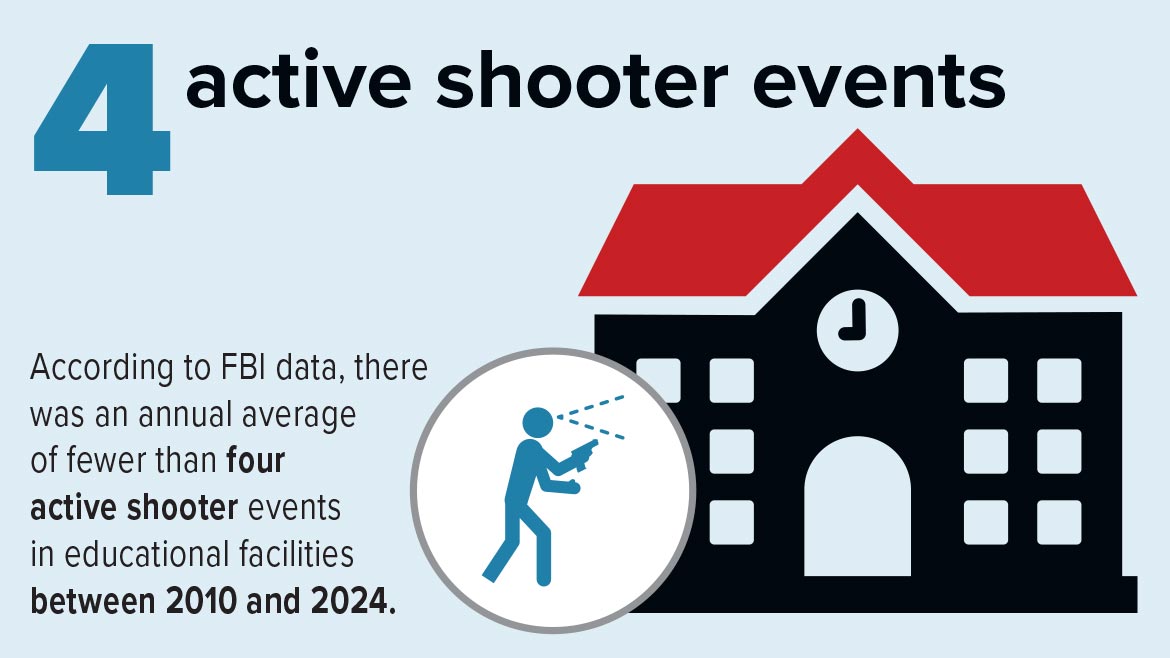
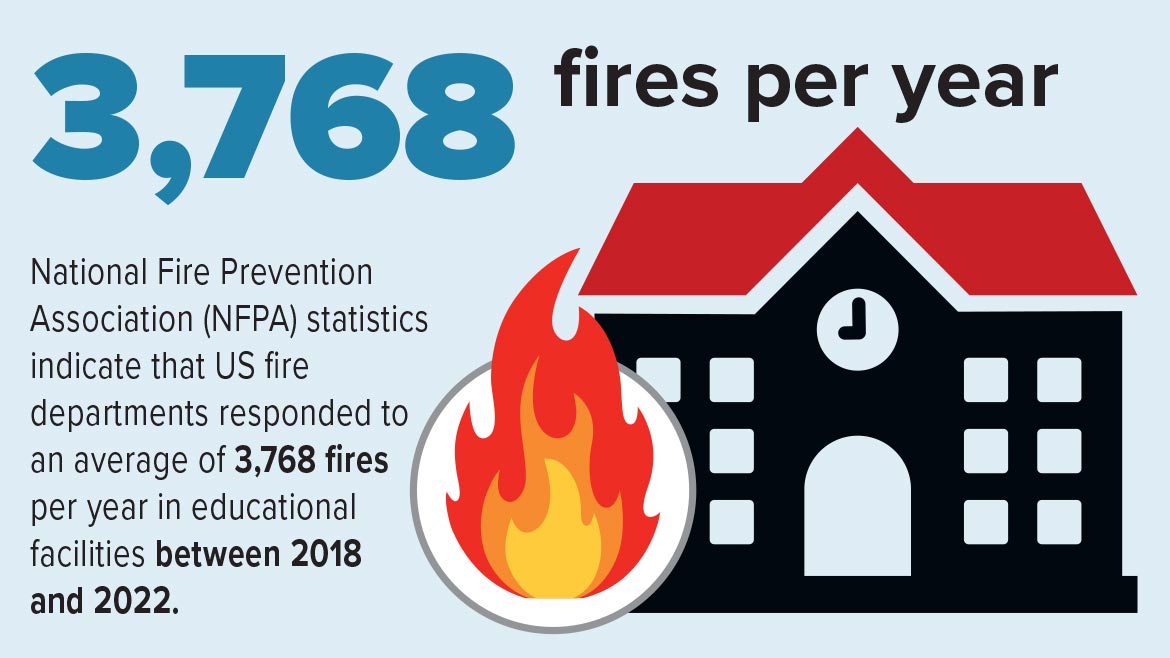
Every school shooing is tragic; however, a comprehensive security strategy requires school administrators to evaluate the statistical probability of various hazards to avoid “tunnel vision.” While active shooter events receive the most significant media attention, they remain statistically rare. According to FBI data, there was an annual average of fewer than four active shooter events in educational facilities between 2010 and 2024. In contrast, National Fire Prevention Association (NFPA) statistics indicate that US fire departments responded to an average of 3,768 fires per year in educational facilities between 2018 and 2022.
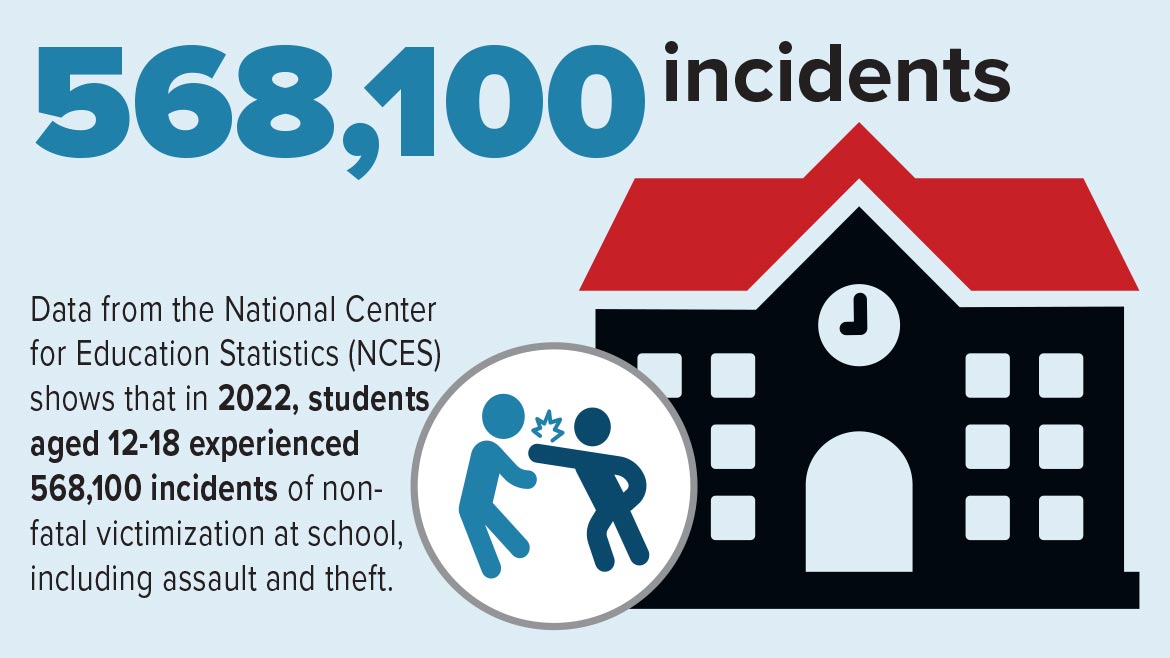
Furthermore, the risk of internal violence and non-fatal victimization is significantly higher than the threat of an external intruder. Data from the National Center for Education Statistics (NCES) shows that in 2022, students aged 12-18 experienced 568,100 incidents of non-fatal victimization at school, including assault and theft. As noted by the Door Security & Safety Foundation, storing a barricade device in a classroom simplifies the process for an unauthorized person to secure a room and commit a crime, such as bullying or physical violence, while blocking intervention.
The Path Forward
The findings from the Oxford High School report and the documented weaponization of devices in the Capital Gazette shooting underscore a critical reality: physical hardware cannot replace robust operational policies and adherence to life-safety codes. To fulfill their duty of care, school districts should prioritize code-compliant locking solutions, the installation of impact-resistant glazing and comprehensive training for all staff.
Effective school security does not require a choice between being “locked in” or “locked out.” By maintaining the balance between security and safety, administrators can protect classrooms from external threats without compromising the fundamental, lifesaving right to free egress. The goal remains clear: secure the door, but never at the expense of life safety.
https://www.securitymagazine.com/articles/102583-the-unintended-consequences-why-quick-fix-security-may-compromise-life-safety
