

Long before anyone confirmed where and when Taylor Swift and Travis Kelce’s wedding would be, thousands of fans believed they already knew. Street-closure permits pointed to Madison Square Garden. Reported filings described separate gatherings of guests. Delivery activity outside the venue, including lighting equipment, draping, seating, and a crate labeled “40-inch mirror ball,” gave observers even more to analyze about the upcoming “toast of the town.” None of that required a traditional leak. It came from public records, visible logistics, and people with phones.
This is open-source intelligence (OSINT) in its most ordinary form. It requires no agency, no private investigator, and no technical exploit, only enough people asking what one visible detail means once combined with everything else already known. Whether fan theories were correct matters less than the method: permits, deliveries, and casual observation converging on a coherent picture faster than anyone intended.
The exposure here is worth isolating because it is not the type executive protection usually addresses. Most security focuses on the individual: their digital footprint, their travel, the threats aimed at them. This sits one layer removed. It belongs to the event itself: to the vendors, contractors, permits, deliveries, and logistics the event cannot happen without. A principal can run a disciplined personal footprint and still be fully exposed, because the exposure isn’t coming from them.
Three Layers of Exposure
We separate exposure into three layers because the controls that protect one do almost nothing for the others. An NDA is powerful at the core and useless against a filed permit. Treating event exposure as one undifferentiated problem is how teams guard the front door while the loading dock stays wide open.
The core layer is the principal, the guest list, the date and the location. Established controls work here: NDAs, invitations that withhold time and place until close to the event, individually coded invitations that let a leak be traced to the perpetrator, and device restrictions on site. The core is the one layer where secrecy is a realistic goal.
The operational layer is everything required to make the event happen: vendors, contractors, permits, lodging, transportation, production companies, and deliveries. This is where most real exposure lives, because the activity is necessary, spread across dozens of people with no stake in secrecy, and often disclosed by law or ordinary business practice.
Controls here are contractual and procedural. Require prime vendors to name subcontractors and day-of staff in writing. Write real-time posting restrictions into contracts. Where permitted, name a production company or management entity on permits and venue holds, instead of the principal. Stage deliveries through a marshalling point rather than sending labeled trucks straight to the venue. Book lodging under the vendor or agency, not recognizable names.
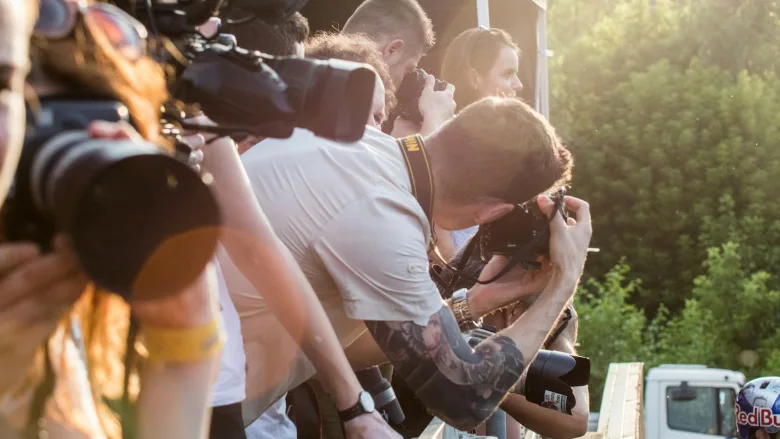
The ambient layer is everything no one controls: bystanders, speculation, local chatter, prediction markets, and photos from observers. You cannot secure this layer, so the way to control it is different. Monitor it and use it as a live measure of how much has already been inferred. If a fan forum has reconstructed your timeline days in advance, that is your exposure, measured in time for you to react.
Closing the Gap
The operational layer is where most events are exposed, and it is the layer teams are least used to treating as a security surface. Three moves close most of the gap to keep your event “Safe & Sound.”
- First, run a pre-event visibility assessment and assign it a named owner. One person maps every vendor, subcontractor, permit, filing, venue dependency, and logistics movement tied to the plan, then asks: if this surfaced on its own, what would it reveal? Anything pointing back to the principal, the date, or the location gets re-routed, re-named, or re-timed. If an outsider working only from public records could reproduce your plan, it is not finished.
- Second, give each group guidance it can follow. Instead of saying “keep it quiet,” establish specific rules. Staff and vendors: route all press to a specific point of contact, no posting until a set time, and no photos of signage, schedules, or labeled equipment. Guests: arrive without announcing travel, no real-time location posts, and no tagging the venue or other guests until after the event. Specific behaviors are far easier to enforce than general discretion.
- Third, watch the public picture before the event, not after. Review permits and municipal filings, street-closure applications, venue calendars, and public conversations for signs details are already emerging. The goal is to know, at any moment, how much is already visible to anyone who looks.
Permits get filed. Trucks make deliveries. People take photos. Some exposure is unavoidable, and the goal is not to erase every trace. It is to make sure no small cluster adds up to a reliable map.
None of this is really about a wedding. A celebrity wedding is just the version that plays out in public, with fans volunteering to do the collection for free. The same permits, vendor trails, and delivery patterns surround board meetings, government visits, executive offsites, and defense conferences. The difference is that no one is live posting your quarterly strategy session, making it easy to assume the footprint isn’t there.
It is.
The only question is whether you mapped it before someone else did.
https://www.securitymagazine.com/articles/102407-when-private-events-become-public-infrastructure-what-celebrity-osint-teaches-security-leaders
